Lost and Found Log Book: A Practical Tracker for Missing Items
Every misplaced item, whether it's a set of keys in a busy office or a cherished personal belonging at an event, creates a moment of frustration and a break in workflow. A systematic approach to managing these situations transforms chaos into a recoverable process. The Lost and Found Log Book is a specialized design asset built for this exact purpose. It's not just a notebook; it's a structured missing items log and lost item tracker designed for clarity and efficiency. This 100-page interior provides a dedicated space to record, track, and resolve lost property incidents, making it an invaluable tool for businesses, institutions, and organized individuals.
Understanding the Lost and Found Log Book
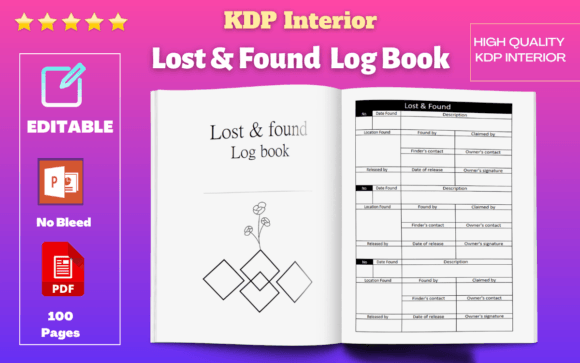
At its core, this log book is a low or no content product, meaning its value lies in its practical structure rather than extensive written content. It functions as a lost & found log, providing consistent, pre-formatted pages where you can document essential details: date found, item description, location, finder's information, and the status of the claim. The visual design is intentionally clean and utilitarian. The layout prioritizes readability and visual hierarchy, ensuring that critical information is easy to enter and retrieve at a glance. The personality of the design is professional and trustworthy—qualities that are paramount when handling someone else's property.
The style is minimalist and functional, typical of effective modern typography for administrative tools. It avoids decorative script fonts or handwritten fonts in favor of clear, legible typefaces—likely a balanced sans serif font for headers and a highly readable serif or sans serif for body text. This choice ensures that the log remains usable under various lighting conditions and when photocopied. The overall appeal is one of professionalism and consistency, which helps build trust with anyone interacting with the system.
Practical Applications Across Industries
The utility of a dedicated lost and found log book extends far beyond a simple notebook on a counter. It becomes a critical component of operational brand identity and customer service for various entities.
- For Businesses and Venues: Hotels, gyms, theaters, and retail stores can use this commercial font-based interior to standardize their lost property process. A well-maintained log demonstrates professionalism, reduces liability, and improves customer recovery rates. It's a tangible part of the service experience.
- For Event Organizers and Schools: Large events, conferences, and educational institutions deal with high volumes of lost items. This tracker allows for organized management during and after the event, facilitating quicker reunions and reducing the administrative burden on staff.
- For Personal and Household Use: On a smaller scale, it can be a household organizer for tracking valuable items, warranty information, or even lending records. The structured format prevents the "I wrote it on a sticky note and lost it" problem.
The design assets provided—in PowerPoint format (totally editable) and PDF format (ready to upload or print)—offer incredible flexibility. A small business owner can purchase the file, customize the cover with their logo design in PowerPoint, and print as many copies as needed. The PDF is perfect for direct use or for creating a print-on-demand product. The 6"x9" size is a practical, portable dimension, and the high-quality resolution interiors ensure that prints are crisp and professional.
Key Design Principles Behind the Log
While the primary function is utility, the design of the Lost and Found Log Book interior applies core principles that influence its effectiveness.
- Readability is Non-Negotiable: The choice of typeface is critical. A clean sans serif font or a highly legible serif font ensures that entries can be read quickly, even if written hastily. The line spacing and margins are calibrated to prevent clutter, a key aspect of good editorial design.
- Visual Hierarchy Guides the User: Clear column headers and consistent spacing create an intuitive flow. This visual hierarchy allows a user to locate a specific entry or fill out a new one without confusion, saving time and reducing errors.
- Consistency Builds Trust: Every page being identical reinforces a sense of order and reliability. For a business, this consistency is part of its operational brand identity, signaling that processes are in place and under control.
- Neutral Aesthetic for Broad Appeal: The design avoids trendy or overly specific creative font styles. This neutrality ensures it fits seamlessly into any environment—from a corporate office to a community center—without clashing with existing decor or branding.
Choosing and Using This Design Asset
When evaluating this premium font-based interior for your projects, consider its direct application. It's a commercial font product, meaning it's licensed for business use, which is essential if you plan to incorporate it into your own branded materials for sale or distribution.
Evaluate the Fit: Does your process require the structured tracking this log provides? If you're currently using random notebooks or digital spreadsheets that are inconsistent, this offers a unified, professional solution. The font pairing used in the design is already optimized for this specific context, so you don't need to be a typography expert to implement it effectively.
Practical Guidance for Implementation:
- Customization: Use the PowerPoint file to add your organization's name, logo, or specific instructions to the cover or introductory page. This personalization strengthens your brand identity.
- Distribution: The PDF can be uploaded to a digital printer for high-quality physical copies. For internal use, you might print and bind it in-house.
- Digital Use: While designed for print, the PDF can also be used digitally on tablets with note-taking apps, though the core strength is its physical, tangible form.
Remember, the goal is to solve a practical problem. This Lost and Found Log Book is a tool. Its success depends on consistent use. Place it in a designated, accessible location, train staff on its importance, and make the process of logging and claiming items as simple as the log itself. In doing so, you turn a common inconvenience into a demonstration of care and professionalism.